In the current era of booming cultural and tourism industry development, various regions are launching cultural and tourism projects, hoping to stimulate local economies and enhance city image through this approach. However, amidst this boom, a question is gradually surfacing: Does the success of cultural and tourism projects truly depend solely on massive investment? The answer may not be that simple. In fact, for many cultural and tourism projects, the most urgent need is not investment, but efficient and innovative operations. The following eight aspects are key reasons:
Integrated Investment and Operation, Simultaneous Planning and Operation
Cultural and tourism project investment and operation need to be considered integrally; investment should not be prioritized over operation. Effective operational planning can effectively integrate product management, service management, and experience management to form an effective approach. In the face of fierce market competition and ever-changing consumer demands, how to achieve sustainable development of cultural and tourism projects has become a difficult problem for numerous investors and operators. The concept of "integrated investment and operation, simultaneous planning and operation of cultural and tourism projects" provides readers with a new perspective and practical path for consideration.
I. The Current Status of the Disconnect Between Investment and Operation of Cultural and Tourism Projects
Under the traditional model, investment and operation of cultural and tourism projects are often regarded as two independent stages. Investors are responsible for capital injection and initial project construction, while operators take over subsequent maintenance and management work. While this segmented model clarifies responsibilities to a certain extent, it also brings many problems. For example, investors may focus more on short-term investment returns while neglecting the long-term operational value of the project; operators may be limited by existing facilities and find it difficult to make flexible adjustments and innovations during operation.
II. The Necessity of Integrated Investment and Operation
In response to the above problems, the concept of "integrated investment and operation of cultural and tourism projects" has emerged. This concept emphasizes that from initial project planning to later operational management, it should be handled by the same entity or a closely cooperating team. The advantage of this is that it ensures that the investment strategy and operational strategy remain consistent from the outset, avoiding decision-making errors caused by information asymmetry or inconsistent goals. At the same time, integrated investment and operation also helps improve the overall efficiency and response speed of the project, enabling the project to better adapt to market changes and consumer demands.
III. Simultaneous Planning and Operation: Achieving Efficient Operation of Cultural and Tourism Projects
Based on integrated investment and operation, "simultaneous planning and operation" is the key to achieving efficient operation of cultural and tourism projects. "Simultaneous planning and operation" refers to the close connection and mutual support between the planning and operational stages of the project. During the planning stage, it is necessary to fully consider the actual operational needs and potential challenges, and formulate feasible operational strategies. During the operational stage, it is necessary to adjust and optimize the planning plan in a timely manner based on market feedback and changes in consumer demand.
Specifically, simultaneous planning and operation requires the project team to conduct in-depth market research and consumer demand analysis during the planning stage to clarify the project's positioning and target customer groups. At the same time, it is necessary to communicate and cooperate fully with the operation team to ensure that the planning plan can be effectively implemented and executed during operation. In the operational stage, the project team needs to closely monitor market dynamics and consumer feedback, and adjust operational strategies and product combinations in a timely manner to maintain the project's competitiveness and attractiveness.
IV. Practical Cases and Insights
Taking a well-known cultural and tourism project as an example, this project has achieved remarkable results in integrated investment and operation and simultaneous planning and operation. In the initial stage of the project, investors and the operation team worked closely together to develop a detailed project planning plan. During operation, the project team adjusted operational strategies and product combinations in a timely manner based on market feedback and changes in consumer demand, launching a series of attractive activities and experience projects. These measures not only improved the project's reputation and brand recognition but also brought considerable economic and social benefits.
From this case, we can draw the following insights: First, integrated investment and operation is the key to the success of cultural and tourism projects; second, simultaneous planning and operation is an important guarantee for achieving efficient project operation; finally, the project team needs to maintain keen market insight and innovation capabilities, constantly adapting to market changes and changes in consumer demand.
The concept of "integrated investment and operation, simultaneous planning and operation of cultural and tourism projects" provides new ideas and directions for the development of the cultural and tourism industry. In future development, we should pay more attention to the long-term operational value and improvement of innovation capabilities of projects, and through the practical exploration of integrated investment and operation and simultaneous planning and operation, promote the cultural and tourism industry to develop in a higher quality and more efficient direction.
Three Planning and One Regulation for Cultural and Tourism Projects
Investment and operation of cultural and tourism projects have become an important force in promoting local economic development and enhancing city image. However, a successful cultural and tourism project is not achieved overnight; it requires careful planning and scientific decision-making in multiple stages such as project planning, construction, and operation. This article will conduct an in-depth discussion on the "three planning and one regulation for cultural and tourism projects" (namely, market planning, product planning, marketing planning, and overall planning).
I. Market Planning: Accurate Positioning, Understanding Needs
Market planning is the starting point for investment in cultural and tourism projects, and its core lies in accurately positioning the target market and customer groups. This requires investors not only to have a deep understanding of the development trends of the domestic and international cultural and tourism markets but also to conduct detailed analysis of the cultural characteristics, tourism resources, and consumer preferences of the target area. Through market research, big data analysis, and other means, clarify the project's market positioning, target customer groups, and potential competitors, laying a solid foundation for subsequent product planning and marketing planning.
For example, for young tourists, cultural and tourism projects focusing on creativity, interaction, and experience can be planned; for family tourists, the focus is more on the project's parent-child interaction and educational significance. The accuracy of market planning will directly affect the project's market appeal and competitiveness.
II. Product Planning: Innovative Design, Creating Characteristics
Product planning is the soul of cultural and tourism projects. A successful cultural and tourism project must have unique product design and cultural connotations. This requires investors to innovate designs based on the full excavation of local cultural resources, combining market demand to create cultural and tourism products with distinct characteristics and appeal.
Product innovation can be reflected in many aspects, such as the creative design of theme parks, the digital display of historical sites, and the interactive experience of folk culture. At the same time, attention should be paid to the diversification and hierarchy of products to meet the needs and preferences of different tourists. Through unique product planning, not only can the project's reputation and brand recognition be improved, but also the tourists' stay time and willingness to consume can be effectively extended.
III. Marketing Planning: Multi-dimensional Communication, Creating Hotspots
Marketing planning is the key to the successful promotion of tourism projects. In the information age, excellent marketing planning can quickly set off hot topics on social media, attracting the attention and participation of a large number of tourists. This requires investors to constantly innovate in marketing methods and make full use of platforms such as the Internet and new media for multi-dimensional dissemination.
Marketing planning can include online and offline interactive activities, the planning and execution of themed festivals, and promotion through KOLs/influencers. Through carefully planned marketing activities, it is possible to not only enhance the project's exposure and influence but also effectively promote tourist conversion and word-of-mouth marketing. At the same time, attention should be paid to the sustainability and continuity of marketing to ensure that the project maintains high market enthusiasm and attention at different times.
IV. Overall Planning: Scientific Layout, Synergistic Development
Overall planning is the guarantee for the investment and operation of tourism projects. A successful tourism project needs to conduct scientific overall planning and layout based on market planning, product planning, and marketing planning. This includes many aspects, such as project location selection, land use planning, traffic organization, landscape design, and facility construction.
Overall planning should focus on the sustainable development of the project and the protection of the ecological environment, ensuring the coordination of economic, social, and environmental benefits. At the same time, attention should be paid to synergistic development with surrounding areas to form a cluster effect and competitive advantage in the regional tourism industry. Through scientific overall planning, it is possible to not only improve the overall quality and competitiveness of the project but also inject new vitality and impetus into the development of the local economy.
The three planning and one regulation of tourism projects is a systematic project that requires the joint participation and efforts of investors, the government, planning and design units, and other parties. There are many issues worth further consideration and discussion. For example, how to achieve innovative development of the project while protecting cultural heritage? How to balance the economic and social benefits of the project? How to build the ecological chain and value chain of the tourism industry? These issues need to be continuously explored and summarized in practice.
Exploration of the Three-Dimensional Integrated Model for Tourism Projects
The success of tourism projects is not achieved overnight. It relies on a scientific, systematic, and efficient investment and operation model—a three-dimensional integrated system of pre-planning, mid-term construction, and post-operation management, forming a closed loop, improving with each cycle. This model not only concerns the success or failure of the project but also affects the inheritance and innovation of local culture and the upgrading and transformation of the tourism industry.
I. Pre-planning: The Foundation for Project Success
Pre-planning is the starting point for tourism project investment and the key to determining whether the project will be successful. In this stage, we need to conduct in-depth research on market demand, resource endowments, cultural background, and other factors to ensure that the project is accurately positioned and has distinctive characteristics.
First, it is necessary to clarify the project's target market, understand the needs and preferences of tourists, and use this as a guide for project design. At the same time, fully excavate the cultural resources of the project's location and integrate cultural elements into the project planning to create cultural tourism products with local characteristics.
Secondly, attention should be paid to the sustainability of the project to avoid excessive development that damages the ecological environment. Through scientific and reasonable planning, the harmonious unity of economic, social, and environmental benefits can be achieved.
II. Mid-term Construction: Ingenious Craftsmanship, Creating Fine Products
Mid-term construction is the key stage of transforming pre-planning into reality. In this stage, we need to pay attention to construction quality and safety to ensure that the project can proceed smoothly according to the planned requirements.
On the one hand, it is necessary to use high-quality building materials and advanced construction techniques to create high-quality tourism products. At the same time, strengthen safety management at the construction site to ensure the life safety and physical health of construction personnel.
On the other hand, attention should be paid to the details of the project and the creation of a cultural atmosphere. Through carefully designed landscapes, buildings, and decorations, tourists can feel a strong cultural atmosphere and unique local customs during their visits.
III. Post-operation Management: Continuous Innovation, Quality Improvement
Post-operation management is the key to the continuous development of tourism projects. A successful tourism project not only needs to put in sufficient effort in pre-planning and mid-term construction but also needs to continuously innovate and improve quality in post-operation management.
First, attention should be paid to improving the tourist experience and service quality. Through measures such as optimizing tour routes, improving service facilities, and improving service levels, tourists can enjoy a more convenient, comfortable, and pleasant experience during their visits.
Secondly, it is necessary to strengthen market marketing and brand promotion. Through a combination of online and offline methods, expand the project's reputation and influence, attracting more tourists to visit.
Finally, attention should be paid to the innovative development and transformation and upgrading of the project. According to changes in market demand and upgrades in tourist needs, continuously adjust and optimize the content and form of the project to maintain the project's competitiveness and attractiveness.
The three-dimensional integrated model for tourism projects is an interconnected and mutually reinforcing whole. Pre-planning lays a solid foundation for the success of the project, mid-term construction transforms planning into reality, and post-operation management allows the project to continuously radiate new vitality. Only by putting in sufficient effort in these three stages can the sustainable development and long-term profitability of tourism projects be achieved.
Market Positioning of Tourism Projects
The core of successful tourism project operation lies in accurate and creative market positioning. This includes determining the target tourist group, refining the project theme, planning the product line, and formulating marketing strategies. These all need to be achieved through in-depth market research and precise project planning. This is not only related to the survival of the project but also to whether it can lead new trends in tourism and become a cultural landmark of the city.
I. Insight into Needs, Accurate Reach
First, successful market positioning begins with a deep understanding of the target customer group. Tourism projects need to clarify what their core attraction is: natural scenery, historical culture, leisure and entertainment, or unique experiences? Through a detailed analysis of the target market, understand the age structure, interests, hobbies, and consumption habits of tourists, and thus accurately position the project's service content and market strategy. For example, for young families, parent-child tourism projects that combine education and entertainment can be designed; while for young people who pursue excitement, personalized experiences such as extreme sports and adventure travel can be provided. This accurate reach based on needs is the first step in attracting tourists.
II. Differentiation, Creating Characteristics
In today's increasingly serious homogenization of the tourism market, differentiated competition has become the key to a project's success. Each tourism project should have its own "soul," which can be unique regional culture, historical stories, or innovative tourism experience models. For example, combining traditional customs with modern technology to create an immersive cultural experience; or relying on natural scenery to develop outdoor adventure and ecological health-preservation products. Through differentiated positioning, the project can not only stand out among many competitors but also arouse tourists' curiosity and desire for exploration, enhancing the project's attractiveness and repeat visitation rate.
III. Emotional Resonance, Cultural Leadership
The success of a cultural tourism project lies not only in the improvement of hardware facilities and service quality, but also in its ability to resonate emotionally with tourists and convey unique cultural values. A successful cultural tourism project often tells a moving story, allowing tourists to feel the warmth and depth of the culture during their visit. For example, by holding cultural festivals, art exhibitions, and folk performances, tourists can experience culture through participation, enhancing their sense of identity and belonging to the local culture. This market positioning, guided by culture, not only enriches the spiritual world of tourists but also lays a solid cultural foundation for the long-term development of the project.
IV. Innovation-driven, continuous upgrading
The market is ever-changing, and the market positioning of cultural tourism projects also needs to keep pace with the times. This requires project operators to have keen market insight and innovation capabilities, constantly adjusting and optimizing project content and service models based on market feedback and changes in tourist needs. For example, using advanced technologies such as big data and artificial intelligence to improve the intelligent level of tourist experience; or introducing cross-border cooperation to deeply integrate tourism with culture, education, and technology to create diversified tourism products. Through innovation-driven development, maintaining the vitality and competitiveness of the project allows it to remain undefeated in the fierce market competition.
The market positioning of cultural tourism projects is an in-depth exploration of insight, differentiation, emotion, and innovation. Only by accurately grasping market demand, creating unique charm, stimulating emotional resonance, and continuously upgrading and innovating can we stand out in the cultural tourism market and become a leading cultural tourism landmark.
The Soul of Cultural Tourism Projects: Tourist Experience
In today's diverse and personalized tourism era, cultural tourism projects are emerging like mushrooms after a spring rain. They may rely on natural scenery, excavate historical culture, or integrate modern technology to provide tourists with a rich variety of tourism experiences. Among the numerous cultural tourism projects, there is a common core product—the tourist experience. From hardware facilities to software services, from the creation of a cultural atmosphere to the design of interactive experiences, the operation team needs careful planning and meticulous execution.
I. Tourist Experience: The Lifeline of Cultural Tourism Projects
The success or failure of a cultural tourism project largely depends on the tourists' experience. An excellent cultural tourism project must be able to allow tourists to obtain positive emotional experiences such as pleasure, surprise, and satisfaction during their visit. This experience comes not only from the project's hardware facilities and landscape design but also from the cultural connotations, emotional resonance, and value recognition conveyed by the project. Therefore, tourist experience is the lifeline of cultural tourism projects and a key indicator for measuring their success.
II. Tourist Experience: Deep Integration of Culture and Tourism
Cultural tourism projects are called "cultural tourism" because they are not only tourism projects but also platforms for cultural display and dissemination. In cultural tourism projects, tourist experience is the carrier of the deep integration of culture and tourism. Through visits, participation, and interaction, tourists can gain an in-depth understanding of the history, customs, and artistic heritage of the project's location, thus feeling the charm and depth of the culture. This cultural experience is one of the important gains tourists obtain in cultural tourism projects and is the core competitiveness that distinguishes the project from other tourism products.
III. Tourist Experience: Meeting Personalized and Differentiated Needs
With the continuous development of the tourism market, tourists' needs are becoming increasingly diverse and personalized. An excellent cultural tourism project must be able to accurately capture changes in tourist needs and provide personalized and differentiated tourism experiences. This includes designing different tour routes, activity content, and service methods based on factors such as tourists' age, gender, interests, and cultural background. By meeting tourists' personalized needs, cultural tourism projects can attract more tourists and improve tourist satisfaction and loyalty.
IV. Tourist Experience: The Driving Force of Continuous Innovation and Optimization
Tourist experience is a dynamic process that changes constantly with the development of the tourism market and changes in tourist needs. Therefore, cultural tourism projects must maintain the driving force of continuous innovation and optimization, constantly improving the quality and level of tourist experience. This includes updating hardware facilities, optimizing landscape design, enriching cultural connotations, and improving service quality, among other aspects. Through continuous innovation and optimization, cultural tourism projects can maintain their attractiveness and competitiveness to tourists and achieve sustainable development.
As the core product of cultural tourism projects, the importance of tourist experience is self-evident. It is necessary to better improve the tourist experience, meet the personalized needs of tourists, achieve sustainable development of cultural tourism projects, and provide tourists with richer, more diverse, high-quality tourism experiences with cultural connotations.
Sustainable Development of Cultural Tourism Projects
The sustainable development of cultural tourism projects depends on good operational management, including daily maintenance, renovations, marketing, and crisis response. The operation team must establish a scientific management system and effective operational mechanisms to ensure that the project maintains a stable development trend in the face of fierce market competition.
I. Operational Management: The Lifeline of Cultural Tourism Projects
Cultural tourism projects, whether historical sites or emerging theme parks and cultural blocks, require operational management to ensure their normal operation and sustainable development. Operational management not only concerns the daily maintenance and safety of the project but also involves optimizing the tourist experience and formulating and implementing market strategies. It can be said that operational management is the lifeline of cultural tourism projects, directly related to the project's vitality and competitiveness.
II. Core Elements of Good Operational Management
1. Tourist experience first: In cultural tourism projects, tourists are the core consumer group, and their satisfaction is the key to measuring the success of the project. Therefore, operational management needs to prioritize the tourist experience, constantly improving tourist satisfaction and loyalty by providing high-quality services, creating unique cultural experiences, and optimizing tour routes.
2. Cultural inheritance and innovation: Cultural tourism projects are not only tourist destinations but also carriers of cultural inheritance and innovation. Operational management needs to deeply excavate the cultural connotations behind the project, using creative planning and technological integration to revitalize traditional culture while introducing modern elements to meet the diverse cultural needs of tourists.
3. Market sensitivity and flexibility: In the face of fierce market competition, operational management needs to have keen market insight, timely adjust market strategies, and grasp the trends and changes in the tourism market. At the same time, maintain operational flexibility to quickly respond to market changes and meet the personalized needs of tourists.
III. Challenges and Countermeasures Faced by Operational Management
Although operational management is crucial for the sustainable development of cultural tourism projects, many challenges remain in practice, such as funding shortages, talent shortages, and policy restrictions. To address these challenges, we can adopt the following countermeasures:
1. Diversified financing channels: Expand financing channels through government guidance, social capital participation, and international cooperation to provide sufficient financial support for cultural tourism projects.
2. Talent cultivation and introduction: Strengthen the cultivation and introduction of cultural tourism talents to establish a high-quality, professional operational management team to provide talent support for the sustainable development of the project.
3. Policy Innovation and Coordination: Actively seek government policy support, promote policy innovation, and strengthen communication and coordination with relevant departments to create a favorable external environment for the operation and management of cultural tourism projects.
Operation and management are the core driving forces for the sustainable development of cultural tourism projects. By optimizing visitor experience, deepening cultural inheritance and innovation, and enhancing market sensitivity and flexibility, we can effectively address the challenges in operation and management and promote the high-quality development of cultural tourism projects. At the same time, we should also recognize that operation and management is a continuous optimization process that requires continuous exploration and innovation to adapt to the ever-changing market demands and visitor expectations.
Cost Control of Cultural Tourism Projects
The development and operation of cultural tourism projects is not easy, and cost control is particularly crucial. Effective cost control can avoid unnecessary expenses and ensure the effective use of funds.
I. Cost Control: The Lifeline of Cultural Tourism Projects
Cultural tourism projects involve multiple stages, including land acquisition, planning and design, construction, and operation and management. Each stage involves huge capital investment. Effective cost control can not only ensure the smooth implementation of the project but also enhance the project's profitability and market competitiveness. Conversely, if costs are out of control, the project may fall into financial difficulties, or even lead to project failure, causing a heavy blow to investors and the local economy.
II. Challenges Faced: Complexity and Uncertainty
1. Uncertainty of Market Demand: The success or failure of cultural tourism projects largely depends on the grasp of market demand. However, market demand is often affected by various factors such as the economic environment, policy orientation, and consumer preferences, making it difficult to accurately predict.
2. Long Construction Cycle: Cultural tourism projects usually have a long construction cycle, during which they may face risks such as fluctuations in material prices and rising labor costs, increasing the difficulty of cost control.
3. Differences in Project Scale: The cost structure of cultural tourism projects of different scales varies significantly. Small-scale projects may pay more attention to cost control, while large-scale projects may face more complex financial management issues.
4. Changes in Policies and Regulations: Adjustments to policies and regulations may have a direct impact on the cost of cultural tourism projects, such as land policies, tax policies, and environmental protection requirements.
III. Implementation Strategies: Fine Planning, Efficient Execution
1. Preliminary Planning and Market Research: Before the project starts, conduct thorough market research and needs analysis to clarify the project's positioning and target customer groups. At the same time, combine local characteristics and resource advantages to formulate a scientific and reasonable planning plan to control costs from the source.
2. Refined Budget Management: Establish a detailed budget system to estimate and budget the costs of various aspects of the project. By regularly reviewing and adjusting the budget, ensure the rationality and effectiveness of fund use.
3. Bidding and Procurement and Contract Management: In the stages of engineering construction and material procurement, reduce procurement costs through open bidding and competitive negotiations. At the same time, strengthen contract management, clarify the rights and obligations of both parties, and avoid disputes and losses.
4. Risk Management and Response: Establish a risk warning mechanism to identify and assess risk factors that may affect project costs. Develop countermeasures, such as purchasing insurance and establishing emergency funds, to mitigate the impact of risks on project costs.
5. Continuous Optimization and Operation: After the project is put into operation, continuously optimize operation strategies and service quality through data analysis and market feedback. At the same time, explore diversified profit models, such as derivative product development and event planning, to improve project income and reduce costs.
Cost control of cultural tourism projects is a systematic project that requires the joint efforts of the government, enterprises, and all sectors of society. Through meticulous planning and efficient execution, we can not only achieve a win-win situation in terms of economic and social benefits but also lay a solid foundation for the sustainable development of cultural tourism projects.
Business Models of Cultural Tourism Projects
As an important bridge connecting culture and tourism, the business model of cultural tourism projects not only concerns the success or failure of the project but also profoundly affects the inheritance of culture and the future of cultural tourism projects. Cultural tourism projects should use several core business models to achieve a continuous cash flow.
I. Cultural IP Driven Model
Cultural IP is the soul of cultural tourism projects. By excavating local characteristic cultures and creating cultural IPs with unique charm, cultural tourism projects can attract a large number of tourists to experience them. For example, some ancient towns, by restoring ancient life scenes and holding traditional festivals, allow tourists to travel through time and space and personally experience the charm of historical culture. In this model, cultural tourism projects not only disseminate culture but also achieve economic benefits through channels such as ticket sales and souvenir sales. However, how to maintain the freshness and attractiveness of cultural IP and avoid homogeneous competition is a major challenge facing this model.
II. Industrial Integration Model
The industrial integration model of cultural tourism projects refers to the deep integration of culture, tourism, and other related industries (such as agriculture, handicrafts, and technology) to create diversified tourism experiences. For example, some rural cultural tourism projects, by combining modern agriculture, allow tourists to participate in farming activities and taste local agricultural products, experiencing rural life while promoting the sales of agricultural products. In addition, the integration of technological elements has added new vitality to cultural tourism projects, such as the application of AR/VR technology in the restoration of ancient sites and cultural displays, allowing tourists to experience the charm of culture through interaction. The key to the industrial integration model lies in finding the convergence points between various industries and achieving resource sharing and complementary advantages.
III. Community Participation Model
The community participation model is the key to the sustainable development of cultural tourism projects. By encouraging local community residents to participate in the planning, operation, and management of cultural tourism projects, it is not only possible to effectively protect cultural heritage but also to enhance the tourist experience. For example, some ethnic minority villages, by organizing tourists to participate in ethnic song and dance performances and handicraft production, showcase ethnic culture while increasing residents' income. In this model, cultural tourism projects are no longer simply commercial activities but become important ways to promote community development and enhance national unity. However, how to balance commercial interests and community rights and ensure the sustainability and fairness of community participation is an issue that this model needs to address.
With the increasing awareness of environmental protection, eco-friendly cultural tourism projects are increasingly favored by tourists. In the planning and design of such projects, the protection and restoration of the ecological environment are fully considered. Measures such as building ecological trails, promoting green transportation, and implementing garbage classification are used to reduce the impact on the environment. At the same time, by holding environmental protection themed activities and conducting ecological education, the environmental awareness of tourists is improved. The eco-friendly model not only conforms to the concept of sustainable development but also brings unique ecological experiences and brand effects to cultural tourism projects. However, how to achieve economic benefits while protecting the ecology is the main challenge facing this model.
There are various business models for cultural tourism projects, each with its unique advantages and challenges. In the future, with the continuous changes in market demand and continuous technological innovation, the business models of cultural tourism projects will become more diversified and personalized. As practitioners and participants in the cultural tourism industry, we should continuously explore and innovate to find the most suitable business model for our own development and promote the continuous prosperity and development of the cultural tourism industry.
In summary, the success of a cultural tourism project depends not only on initial investment, but more importantly on subsequent operations and management. Through scientific planning, effective execution, and continuous management, cultural tourism projects can realize their market and cultural value, winning the reputation of tourists and market recognition.
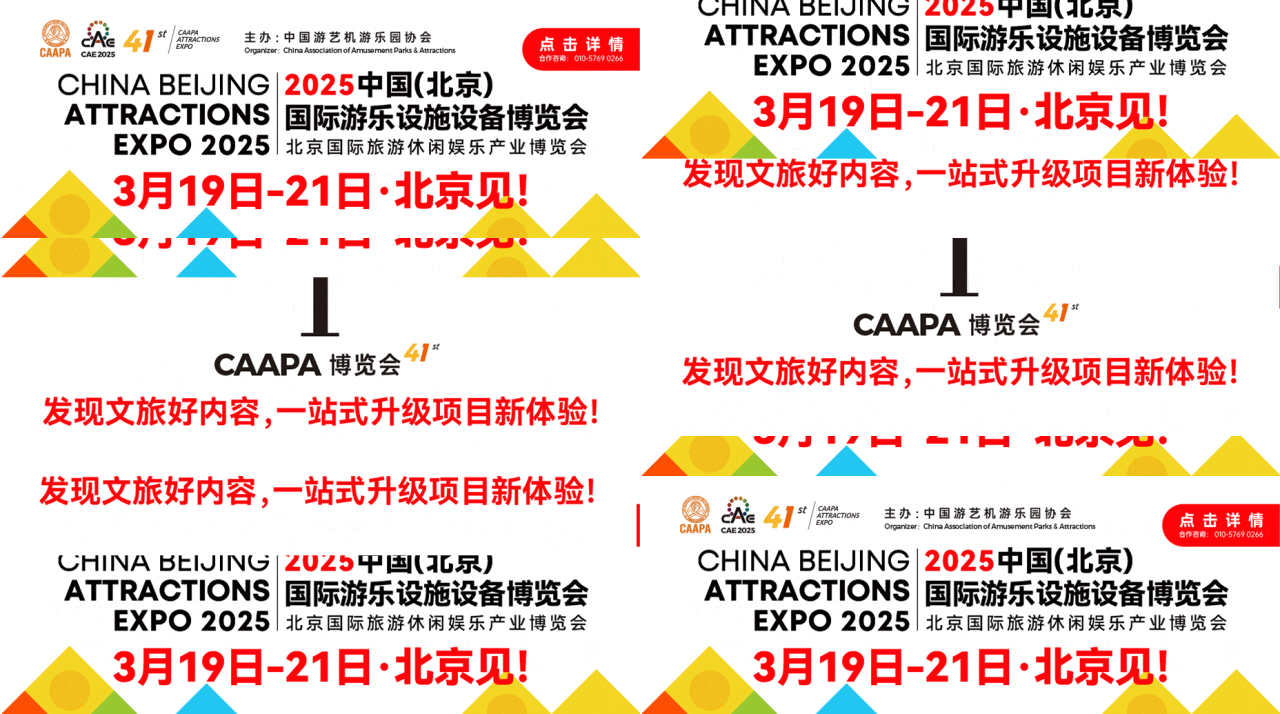
Recommended Important Cultural and Tourism Events
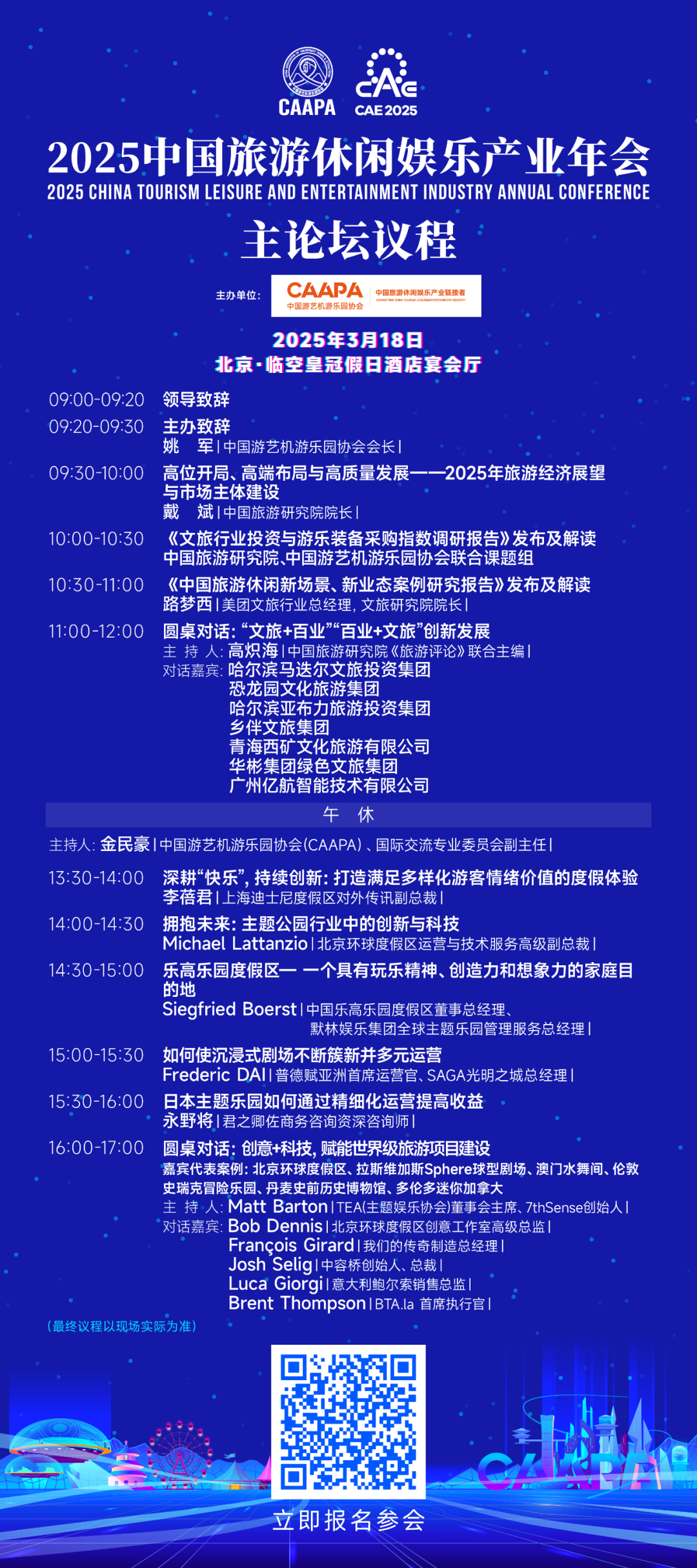
2025 China Tourism, Leisure and Entertainment Industry Annual Conference
March 18-20, Beijing